
 Congratulations!
You are now the proud owner of a finished MS, polished and refined to a sheeny gloss with help from your dear CP. At this point you are ready to share your work more widely to get a fresh perspective.
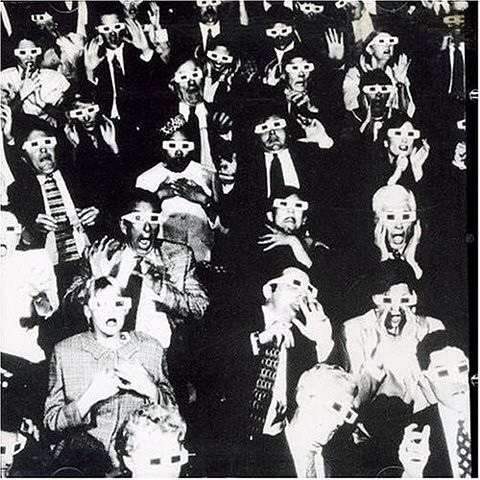
Enter beta readers, the audience members at the first test screening of your MS. Ideally betas will represent a sampling of your target readers and can be an indication of how others will receive your work.
There are those who claim that beta readers shouldn’t be writers themselves, but I would venture to respectfully disagree. Instead I recommend getting your MS into the hands of at least 2-3 betas, and asking them to each focus on the same topics. Are the characters three dimensional and easy to empathize with? Were there so many characters it became difficult to keep track? Were you able to follow the story or did you have to keep rereading?
While the rules of beta reading aren’t by any means homogeneous, there are a few guidelines that remain generally accepted.
1. Not every reader can adhere to a deadline, so ensure that you give them ample time to read your MS from start to finish, maybe even more than once. Also, be prepared that for every five betas you give your work to, only three might actually read it. That’s ok. It doesn’t have to be symptomatic of the caliber of your work. It could very well just mean that they have other obligations that are preventing them.
2. In order to avoid wasting both your and the readers time, ensure beforehand that they are familiar with and enjoy reading your genre.
3. Much like with a CP relationship, writers rely wholly on their beta readers ability to provide honest and constructive feedback. While receiving a purely positive and gushing response may be beneficial for your ego, it’s not quite the raw information you so dearly need.
4. Remember that you solicited the feedback, so don’t get upset or defensive with your reader. You’ve asked them to be vulnerable with you, so be respectful of that. You by no means have to implement any of their suggestions.
5. Give your beta readers some structure and insight as to what you are looking for. The easiest way to accomplish this is by providing a questionnaire that can assist them by addressing specific concerns or questions.
Here is a sample of some beta reader questions from editor extraordinaire Meg Trast:
1. Who was your favorite character? Were there any character inconsistencies?
2. Did the manuscript carry age-appropriate themes for the target audience? Why or why not?
3. What were some aspects that need to be worked on, and how can the author adjust these to make the story more interesting or easy to follow?
Some additional questions to ask your beta readers [source]:
Did the story hold your interest from the very beginning? If not, why not?
Did the dialogue keep your interest and sound natural to you? If not, whose dialogue did you think sounded artificial or not like that person would speak?
Was there a point at which you felt the story lagged or you became less than excited about finding out what was going to happen next? Where, exactly?
Did you notice any obvious, repeating grammatical, spelling, punctuation or capitalization errors? Examples?
Nonfiction authors: Did the topic seem exciting if you had no prior knowledge of it? Did you understand the authors reason for writing the book? Did you feel her/his pain or excitement?
Where can I find beta readers?
The resources are endless, but my two current favorites are Meg Trast’s program and the twitter account @ReadersWriting.
Happy Writing!
 Kiyokotown Writes